Patio Cover Installation Guide | Louisiana Outdoor Living Solutions
Everything you need to know about installing a patio cover in Louisiana, from materials and costs to ideal timing and fire pit safety.
6 min read
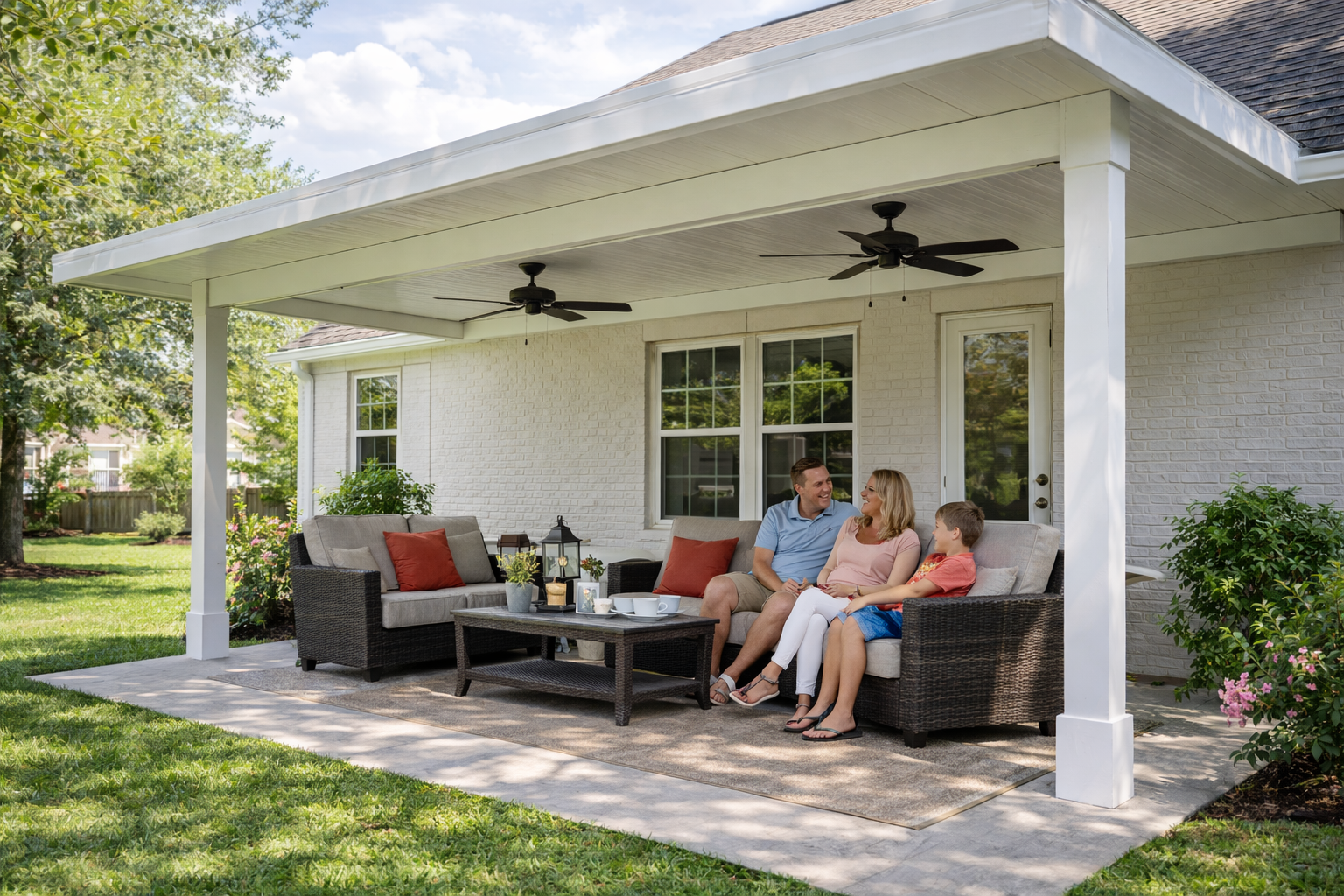
Louisiana patios need shade from summer temperatures in the 90s and cover from sudden afternoon storms. A patio cover can make an exposed backyard usable for more of the year.
Faithful Gutters has installed hundreds of patio covers across Louisiana. This guide covers humid-climate materials, installation timing, costs, screening, and fire pit clearances.
Why Do Louisiana Homes Need Patio Covers?
Louisiana homes benefit from patio covers because shade and rain protection can make outdoor areas usable for more of the day and year. A cover also helps protect furniture and reduces direct sun exposure through nearby windows. These protections can also extend the life of outdoor furnishings.
Climate Challenges
Intense sun and heat:
- UV exposure fades furniture and damages skin
- Surface temperatures on unshaded patios reach 120°F+
- Limits usable hours to early morning and evening
Sudden rainstorms:
- Louisiana afternoon showers arrive without warning
- Ruins outdoor meals and gatherings
- Forces everyone inside during prime outdoor time
High humidity:
- Metal furniture rusts quickly without protection
- Outdoor electronics fail prematurely
- Mold and mildew growth on cushions and fabrics
Benefits of a Quality Patio Cover
- Extended living space - Adds square footage for entertaining
- UV protection - Reduces sun exposure by 95%+
- Weather protection - Stay outside during light rain
- Property value - ROI of 50-80% on installation cost
- Energy savings - Shade reduces heat gain through windows
- Furniture protection - Extends life of outdoor furnishings
How Do Patio Cover Materials Compare in Louisiana?
Aluminum suits homeowners prioritizing humidity resistance and low maintenance, while wood offers a traditional look with more upkeep. Vinyl can fit moderate budgets, and fabric or canvas provides flexible seasonal coverage with a shorter lifespan. The right choice depends on durability, upkeep, design, budget, and whether the cover should be permanent or retractable.
Aluminum Patio Covers
The most popular choice in Louisiana:
Advantages:
- Never rusts, rots, or warps in humidity
- Low maintenance (occasional washing)
- Lightweight but strong
- Various colors and styles available
- Can span long distances without posts
- Insulated options available
Considerations:
- Higher upfront cost than basic materials
- Can be noisy during heavy rain
- Heat transfer without insulation
Best for:
- Louisiana's humid climate
- Long-term durability
- Minimal maintenance requirements
Wood Patio Covers
Traditional appearance with trade-offs:
Advantages:
- Natural, warm aesthetic
- Customizable designs
- Can match home architecture
- Good for staining/painting to match
Considerations:
- Requires regular maintenance (sealing/staining)
- Vulnerable to rot, termites, and warping in humidity
- Higher long-term costs
- May not last as long in Louisiana climate
Best for:
- Specific architectural styles
- Homeowners committed to maintenance
- Shorter-term solutions
Vinyl Patio Covers
Low maintenance alternative:
Advantages:
- No painting or staining needed
- Resists rot and insects
- Various styles available
- Moderate cost
Considerations:
- Can become brittle in extreme heat
- Limited color options
- Less structural strength than aluminum
- May fade over time
Best for:
- Budget-conscious projects
- Moderate climate areas
- Low maintenance preferences
Fabric/Canvas Covers
Retractable and flexible options:
Advantages:
- Retractable for open sky when desired
- Lower cost than permanent structures
- Various colors and patterns
- Can be removed for cleaning
Considerations:
- Requires regular cleaning to prevent mold
- Shorter lifespan (5-10 years)
- Vulnerable to wind damage
- Not permanent protection
Best for:
- Temporary or seasonal solutions
- Budget constraints
- Flexibility preferences
What Should You Consider Before Installation?
Before installation, match the cover's size, height, orientation, and attachment method to the patio and home. Plan around furniture, grills, fans, lighting, sun exposure, airflow, and how the new structure will connect visually and structurally. Include future furniture placement and any outdoor kitchen space in the design.
Size and Scale
Proper sizing guidelines:
- Minimum 10 feet deep for comfortable seating areas
- Width should match or exceed door/patio opening
- Consider future furniture placement
- Account for grill or outdoor kitchen space
Height clearances:
- Minimum 8 feet at lowest point
- 9-10 feet ideal for fans and lighting
- Higher ceilings improve airflow in summer
- Consider tall guests and raised furniture
Orientation and Sun Angles
Louisiana sun patterns:
- South-facing patios need maximum coverage
- East-facing gets intense morning sun
- West-facing experiences hottest afternoon exposure
- North-facing requires least coverage
Design adjustments:
- Extended overhangs on south/west sides
- Partial coverage for east-facing areas
- Consider retractable options for seasonal adjustment
Integration with Home Architecture
Attachment methods:
- Ledger board attachment: Secures to house structure
- Freestanding: Independent posts, no house connection
- Combination: Partial attachment with support posts
Matching elements:
- Roof pitch should complement home
- Color coordination with trim or siding
- Column styles matching home's columns/posts
- Material transitions between house and cover
When Is the Best Time to Install in Louisiana?
Patio covers can be installed throughout the year in Louisiana when weather conditions permit. Spring and summer have higher demand, fall offers comfortable working weather, and winter may provide faster scheduling or potential discounts. Hurricane warnings and heavy rain around concrete work can pause a project.
Year-Round Installation
Patio covers can be installed 360 days a year in Louisiana. Roofing requires dry conditions, but patio cover installation can proceed in most weather.
Weather considerations:
- Light rain doesn't stop work
- Extreme heat may slow afternoon progress
- Hurricane warnings pause projects
- Concrete work needs 48 hours without heavy rain
Popular Installation Seasons
Spring (March-May):
- Most popular season
- Completed before summer heat
- Ready for peak outdoor season
- Ideal for pool areas before swimming season
Summer (June-August):
- Second most popular
- Families want shade for pool time
- Beat the heat for outdoor activities
- Installers work early to avoid afternoon heat
Fall (September-November):
- Perfect for football season
- Thanksgiving outdoor dining
- Comfortable working weather
- Ready for holiday entertaining
Winter (December-February):
- Least busy season
- May get better pricing
- Ready for spring enjoyment
- Less competition for scheduling
Seasonal Pricing Considerations
- Peak season (Spring/Summer): Highest demand, standard pricing
- Off-season (Winter): Potential discounts, faster scheduling
- Post-hurricane: Material shortages possible, prices may increase
How Much Does a Patio Cover Cost?
Patio cover cost depends on material, size, insulation, design complexity, site conditions, electrical work, concrete, screening, and gutters. The estimates below compare installed square-foot ranges for aluminum and wood, plus sample project totals for aluminum covers. Custom angles, access difficulties, and upgrades can increase the total.
Aluminum Patio Cover Costs
Insulated aluminum:
- $25-$45 per square foot installed
- Includes solid roof with insulation
- Thermal barrier reduces heat transfer
- Most popular option
Non-insulated aluminum:
- $18-$30 per square foot installed
- Basic panel construction
- Higher heat transfer
- Budget option
Louvered/Adjustable:
- $50-$80 per square foot installed
- Motorized or manual louvers
- Open/close for sun/rain control
- Premium option
Wood Patio Cover Costs
- $30-$60 per square foot installed
- Varies by wood species and design
- Cedar and redwood most expensive
- Maintenance costs add $500-$1,000/year
Additional Cost Factors
Size and complexity:
- Larger covers cost more overall but less per square foot
- Multiple levels or angles increase cost
- Custom designs add 20-40%
Site conditions:
- Concrete slab existing vs. new pour
- Electrical for fans/lights
- Access difficulties
- Soil conditions for footings
Extras and upgrades:
- Ceiling fans: $300-$800 each
- Lighting: $200-$1,500 depending on type
- Screening: $8-$15 per square foot
- Gutters: $8-$12 per linear foot
Sample Project Costs
12x16 foot aluminum cover (basic):
- Cover: $4,500-$6,500
- Concrete pad: $2,000-$3,500
- Electrical (2 fans, lights): $1,500-$2,500
- Total: $8,000-$12,500
20x20 foot aluminum cover (upgraded):
- Insulated cover: $12,000-$16,000
- Stamped concrete: $6,000-$10,000
- Full electrical package: $3,000-$5,000
- Screening: $3,200-$6,000
- Total: $24,200-$37,000
Can You Use a Fire Pit Under a Patio Cover?
A fire pit may be possible under or near a patio cover only when the fuel type, ventilation, manufacturer instructions, clearances, and local fire codes are satisfied. Gas and wood-burning fire pits have different placement and clearance requirements. Wood-burning options generally need more separation from combustible materials than gas units.
Gas Fire Pits
Safe under patio covers:
- Clean burning, minimal clearance needed
- Minimum 8 feet to combustible ceiling
- Follow manufacturer specifications
- Proper ventilation essential
Installation considerations:
- Non-combustible base required
- Clearance to structure and furniture
- Gas line installation by licensed plumber
- Emergency shutoff accessible
Wood-Burning Fire Pits
Require proper height clearance:
- Minimum 10-12 feet to combustible materials
- Spark arrestor required
- Consider smoke direction (don't asphyxiate guests)
- Check local fire codes
Better alternatives:
- Place wood fire pit away from cover edge
- Use portable fire pits that can be moved
- Consider gas conversion kits
- Designate separate fire area from covered patio
Fire Pit Placement Guidelines
Safe distances:
- 10+ feet from house walls
- 10+ feet from combustible patio covers
- 3+ feet from furniture
- Away from overhanging branches
- Consider prevailing wind direction
Should You Add Screens to a Patio Cover?
Screens can reduce mosquitoes and debris while extending how you use a covered patio. They also reduce airflow, add cost and cleaning, and can affect visibility, so compare screen types and consider leaving one side open. Fiberglass, pet-resistant, no-see-um, and retractable options have different costs and trade-offs.
Benefits of Adding Screening
Mosquito protection:
- Louisiana's state bird (just kidding, but they are prolific)
- Enjoy evenings without constant swatting
- Reduces mosquito-borne disease risk
Debris reduction:
- Keeps leaves and debris out
- Reduces cleaning time
- Protects outdoor furniture
Extended use:
- Enjoy patio during "mosquito hour"
- Create bug-free outdoor dining
- Pet containment option
Screening Types
Traditional fiberglass:
- Most affordable
- Good visibility
- Standard durability
- $8-$12 per square foot
Pet-resistant screens:
- Heavy-duty vinyl-coated polyester
- Resists tears from claws
- Slightly reduced visibility
- $12-$18 per square foot
No-See-Um screening:
- Tighter weave for tiny insects
- Reduced airflow
- Higher cost
- $15-$22 per square foot
Retractable screens:
- Motorized or manual operation
- Roll up when not needed
- Premium option
- $25-$50 per square foot
Screening Considerations
Trade-offs:
- Reduced airflow (can trap heat)
- Cleaning requirements
- Visibility impact
- Cost addition
Best practices:
- Install on two or three sides, not all four
- Leave one side open for airflow
- Consider retractable for flexibility
- Plan for easy access points
Which Permits and Codes Apply?
Permit and code requirements depend on whether the cover is attached or freestanding and on local jurisdiction rules. Verify setbacks, height, footings, wind-load ratings, structural attachments, and any electrical permits before work begins. A contractor should confirm the rules with the applicable authority.
Louisiana Building Codes
When permits are required:
- Attached patio covers typically require permits
- Freestanding structures may be exempt under certain sizes
- Electrical work always requires permits
- Local jurisdictions vary
Typical requirements:
- setbacks from property lines
- Height restrictions
- Footing depth and size
- Wind load ratings
- Attachment methods
Working with Contractors
What to verify:
- Louisiana contractor's license
- Insurance (liability and workers' comp)
- Local permitting knowledge
- References and portfolio
- Written warranty
Red flags:
- No license or insurance
- Pressure to skip permits
- Payment required upfront
- No local references
- Significantly lower bids than competitors
How Do You Maintain a Patio Cover?
Aluminum covers generally need washing, debris removal, and periodic inspection of attachments, scratches, and gutters. Wood covers need annual checks for rot or insects, plus regular cleaning and sealing or staining every 2-3 years. Inspect either material after severe storms, keep roof surfaces clear, and address damage promptly.
Aluminum Covers
Regular maintenance:
- Wash with soap and water 2-3 times per year
- Inspect attachment points annually
- Clear debris from roof surface
- Check gutters if installed
Long-term care:
- Touch up scratches to prevent oxidation
- Inspect after severe storms
- Professional inspection every 5 years
Wood Covers
Required maintenance:
- Stain or seal every 2-3 years
- Inspect for rot or insect damage annually
- Replace damaged boards promptly
- Clean mildew and mold regularly
Frequently Asked Questions
How long does installation take?
Most residential patio covers take 3-7 days to install:
- Day 1-2: Site prep and footings
- Day 3-4: Structure installation
- Day 5-6: Roofing and finishing
- Day 7: Electrical and final inspection
Complex projects or concrete work adds time.
Will a patio cover increase my property taxes?
Possibly. The increase may be minimal:
- Attached covers may add to assessed value
- Freestanding structures may not
- Increases typically modest ($50-$200/year)
- Check with your parish assessor
Can I install a patio cover myself?
Not recommended:
- Structural engineering required
- Permit and code compliance
- Liability if structure fails
- Professional installation ensures safety
Do I need a concrete slab?
Options:
- Existing concrete: Use it
- New concrete: Adds cost but best long-term
- Pavers: Alternative to concrete
- Gravel/ground: Possible but not ideal
What's the ROI on a patio cover?
Return on investment:
- 50-80% of installation cost
- Increased usable living space
- Higher resale appeal
- Energy savings from shade
- Enjoyment value (priceless)
Can I add screening later?
Yes. Screening can be added to an existing patio cover:
- Usually easier during initial installation
- Retrofit screening is possible
- May cost slightly more as add-on
- Plan for it in initial design
How do I choose a contractor?
Selection criteria:
- Louisiana licensed contractor
- Patio cover specialization
- Local references
- Portfolio of completed work
- Written detailed estimate
- Warranty provided
- Insurance verified
How Do You Choose the Right Patio Cover?
Choose a cover based on Louisiana weather, the patio's size, and how you plan to use it.
Shade, rain protection, and screening can make the space useful for more of the year.
Key takeaways:
- Aluminum is best for Louisiana's climate
- Install any time of year (360 days possible)
- Plan for fire pit clearances if desired
- Consider screening for maximum enjoyment
- Work with licensed, experienced contractors
- Proper permits ensure safety and code compliance
Faithful Gutters specializes in custom aluminum patio covers for Louisiana weather.
Options range from simple shade structures to outdoor spaces with fans, lights, and screening. The team handles design and installation.
Ready to enjoy your backyard again? Contact us for a free consultation and custom patio cover estimate.
Need Professional Help?
Our Louisiana experts are ready to help with your roofing, gutters, and exterior needs. Free estimates available.
Or call your service area:
More Louisiana Home Protection Articles
Spring Gutter Maintenance Checklist | Louisiana Homeowner Guide
Complete spring gutter maintenance checklist for Louisiana homes. Learn when to clean, how to inspec
Licensed Roofer Requirements in Louisiana | What Homeowners Need to Know
Learn about Louisiana roofing license requirements, new 2026 laws, how to verify a contractor, and w
Metal Roof vs Shingle Roof | Complete Louisiana Comparison Guide
Compare metal roofs vs asphalt shingles for Louisiana homes. 2025 cost examples, hurricane wind rati