Hail vs Wind Damage | How to Identify Roof Damage for Insurance Claims
Learn to distinguish between hail damage and wind damage on your roof, what to document for insurance, and when to call a professional inspector.
7 min read
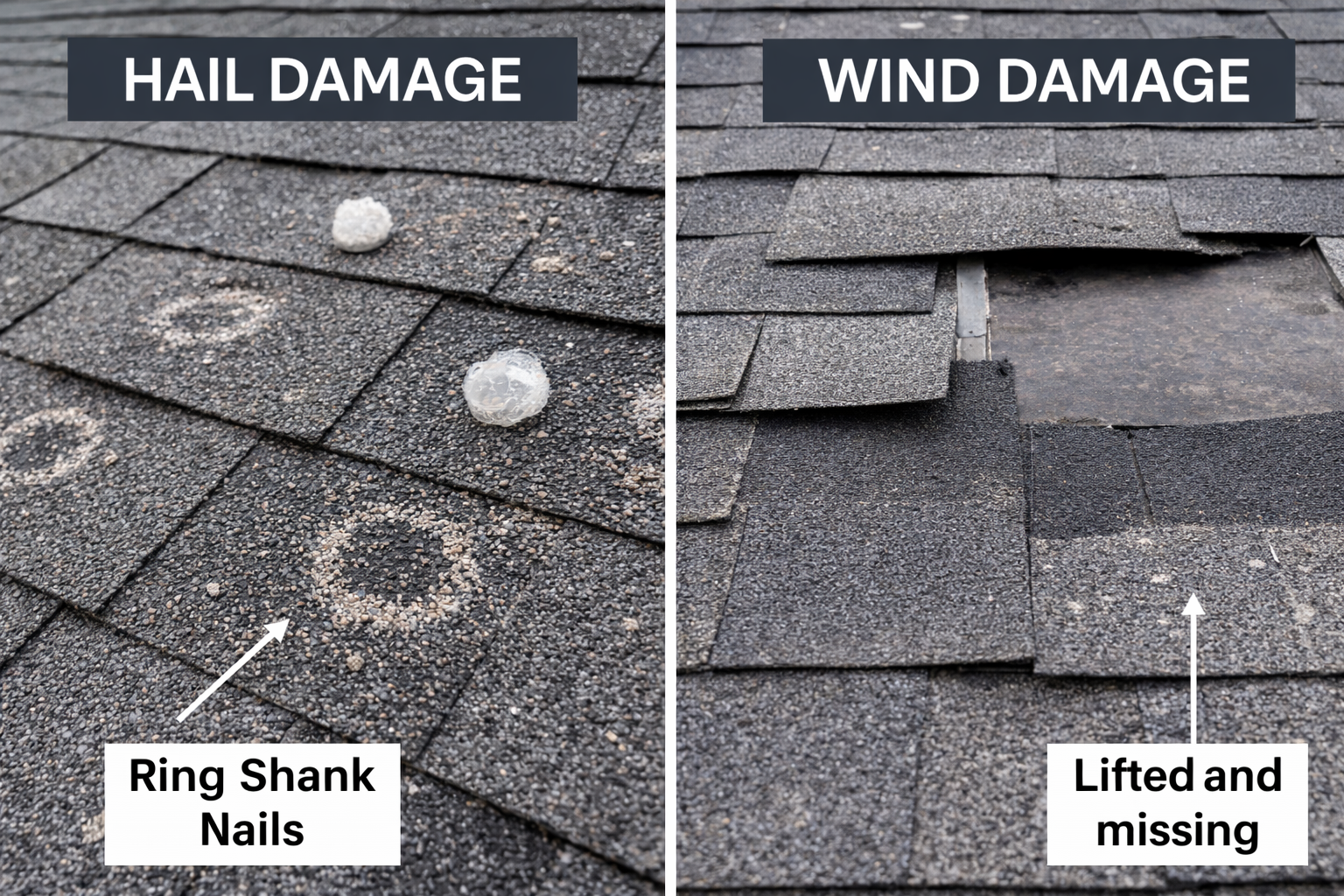
Spring hailstorms and hurricane-force winds can damage a Louisiana roof in different ways.
After a storm, the damage may be visible even when the cause is not. Identifying the cause helps you document the roof before contacting your insurer.
Hail damage usually leaves random impact marks and granule loss. Wind damage more often lifts, creases, or removes shingles. Each type requires different documentation for an insurance claim.
This guide draws on 25 years of storm-damage roof inspections across Louisiana. Use it to identify visible signs, document damage, and decide when to call an inspector.
How Do Hail and Wind Damage Differ?
Hail strikes from above, fracturing shingle surfaces, dislodging granules, and cracking the underlying mat. Wind creates uplift pressure that breaks adhesive seals, tears shingles away, drives rain beneath roofing, and damages flashing or edge details. Louisiana roofs face hail most often in spring, while hurricane-season winds run from June through November.
Hail Damage: Impact from Above
Hailstones strike a roof from above. Even small hail, 1 inch or less, can damage shingles. Hail 2 inches or larger can cause immediate, visible destruction.
How hail damages roofs:
- Direct impact fractures shingle surface
- Granules dislodge from impact points
- Underlying asphalt or fiberglass mat cracks
- Creates weak points that deteriorate faster
Louisiana hail season:
- Peak activity: March through May
- Secondary season: September through November
- Can occur any time of year during severe thunderstorms
Wind Damage: Uplift and Tearing
High winds create pressure differences that lift roofing materials. Gusts of 50+ mph can start causing damage. Hurricane-force winds of 74+ mph can cause catastrophic destruction.
How wind damages roofs:
- Creates uplift pressure under shingle edges
- Breaks adhesive seals between shingles
- Tears shingles completely off roof
- Drives rain under intact shingles
- Damages flashing and edge details
Louisiana wind threats:
- Hurricane season: June through November
- Spring thunderstorms with straight-line winds
- Winter frontal systems with strong gusts
How Can You Identify the Damage?
Identify hail by random dents, granule loss, and matching marks on gutters or vents. Identify wind by missing, lifted, or creased shingles, damaged flashing, and patterns that begin at roof edges or follow the wind's direction. Compare these signs with damage to nearby property, trees, and structures.
Hail Damage Characteristics
What to look for:
-
Random denting pattern
- Hits appear scattered without pattern
- Varies in size based on hailstone diameter
- No predictable direction to damage
-
Granule loss spots
- Circular or irregular bare patches
- Dark spots where granules are missing
- Exposed asphalt shows as black or dark gray
-
Impact marks
- Soft spots or indentations in shingles
- Cracks radiating from impact point
- Splitting or fracturing of shingle surface
-
Damage to metal components
- Dents in gutters, downspouts, vents
- Dented flashing around chimneys
- Damage to HVAC units on roof
Hail damage photo indicators:
- Multiple impact points in small area
- Damage on all roof slopes (not just one side)
- Corresponding damage to soft metal items (gutters, vents)
- Damage to car bodies, patio furniture, or outdoor items
Wind Damage Characteristics
What to look for:
-
Missing shingles
- Complete sections gone, often starting at edges
- Clean tear lines where shingles broke away
- Exposed underlayment or decking visible
-
Lifted or creased shingles
- Shingles raised but still attached
- Crease marks across shingle surface
- Broken adhesive seals
-
Flashing damage
- Metal pieces bent or torn away
- Gaps at roof edges or penetrations
- Loose or missing drip edge
-
Debris impact marks
- Damage from flying tree limbs
- Punctures from airborne objects
- Tears where debris scraped across roof
Wind damage pattern indicators:
- Damage primarily on one side of roof (windward side)
- Progressive damage from edges inward
- Damage aligned with wind direction
- Corresponding damage to trees, fences, or structures
Which Damage Signs Are Easy to Misread?
Hail, wind, normal aging, blistering, and foot traffic can leave similar marks. Compare whether damage is raised or indented, random or directional, and sudden or uniform before treating it as storm damage. Nearby storm evidence and the timing of a sudden change can help distinguish the cause.
Mistake 1: Blistering vs. Hail Damage
Normal shingle blistering:
- Caused by manufacturing defects or age
- Appears as raised bubbles on shingle surface
- Usually uniform across roof
- Not covered by insurance
Hail damage:
- Caused by impact
- Indentations, not raised areas
- Random pattern
- Covered by most insurance policies
How to tell:
Blisters are raised, while hail hits are indented. Look for visible indentations from the ground; a qualified inspector can confirm a depression by touch. Do not climb onto the roof to perform this check.
Mistake 2: Mechanical Damage vs. Wind
Mechanical damage (from foot traffic or installation):
- Usually straight-line tears
- Found in specific areas (near vents, HVAC units)
- Pattern suggests human cause
- Not covered by insurance
Wind damage:
- Follows wind direction
- Often starts at roof edges
- Progressive pattern
- Covered by insurance
Mistake 3: Normal Weathering vs. Storm Damage
Normal aging:
- Uniform granule loss across roof
- Gradual color fading
- Even curling or cupping
- Not storm-related
Storm damage:
- Sudden change after weather event
- Localized to specific areas
- Accompanied by other storm indicators
- Insurance may cover
When Should You Call a Professional Inspector?
Call a professional when you see missing shingles, exposed decking, water entering your home, roof debris, extensive damage, or plan to file a claim. Inspect only from safe ground-level vantage points; a professional can access and document the roof. Stay away from wet, unstable, or electrically hazardous areas.
DIY Safety First
Never go on your roof if:
- Roof is wet or slippery
- Wind is still blowing
- You're uncomfortable with heights
- Structural damage is suspected
- Electrical hazards are present
Safe ground inspection:
- Use binoculars from the ground
- Check gutters and downspouts from ladder
- Look at metal components for denting
- Check the ground for fallen debris
Signs You Need Professional Inspection
Call a professional immediately if:
- You see missing shingles or exposed decking
- Water is entering your home
- Large branches or debris are on the roof
- Damage appears extensive
- You plan to file an insurance claim
Professional inspectors will:
- Safely access all roof areas
- Document damage with photos
- Distinguish between hail and wind damage
- Provide written damage assessment
- Help determine if claim is warranted
How Should You Document Damage for an Insurance Claim?
Document the storm date and time, visible roof damage, related property damage, and weather reports. Take photos from the ground, keep receipts for temporary repairs, and provide any professional inspection report to your insurer. Record known hail size or reported wind speeds when local weather sources provide them.
Immediate Steps After a Storm
-
Take photos from the ground
- Wide shots showing overall roof condition
- Close-ups of visible damage
- Photos of damaged property (cars, patio furniture)
- Date and time stamp all photos
-
Document the storm
- Save weather reports showing hail or wind
- Note date and time of storm
- Record hail size if known (check local weather services)
- Document wind speeds from news/weather reports
-
Make temporary repairs
- Cover damaged areas with tarps if leaking
- Document before/after of temporary repairs
- Keep receipts for materials
- Most policies cover temporary repair costs
What Insurance Adjusters Look For
Hail damage documentation:
- Minimum 8-10 hail hits per 100 square feet (varies by insurer)
- Damage to soft metal components (confirms hail occurred)
- Random pattern across roof
- Corresponding damage to other property
Wind damage documentation:
- Lifted, creased, or missing shingles
- Broken adhesive seals
- Progressive damage pattern
- Corresponding damage to trees/structures
Information to Provide Your Insurer
- Date and time of storm
- Type of storm (hail, wind, both)
- Your observations of damage
- Photos from ground inspection
- Professional inspection report (if obtained)
- List of damaged personal property
What Are the Steps in an Insurance Claim?
An insurance claim generally moves from prompt damage reporting to an adjuster inspection, contractor estimates, and claim resolution. Ask your insurer about its filing deadline, required documentation, coverage, and the timing that applies to your policy. Contractor bids can compare materials, methods, and the insurer's scope of work.
Step 1: Contact Your Insurance Company
Report the damage promptly:
- Most policies require prompt reporting
- Delays can complicate claims
- Ask about deadline for filing
- Request claim number and adjuster contact
Step 2: Insurance Adjuster Inspection
The adjuster will:
- Inspect your roof in person
- Document all damage
- Determine if damage meets policy thresholds
- Provide repair/replacement estimate
- Issue claim decision
Important: You have the right to have your contractor present during the adjuster's inspection. This helps ensure all damage is properly identified.
Step 3: Contractor Bids
Get multiple estimates:
- At least 2-3 licensed Louisiana roofers
- Ensure they understand insurance scope of work
- Compare materials and installation methods
- Verify FORTIFIED certification if desired
Step 4: Claim Resolution
Timeline expectations:
- Initial inspection: 1-2 weeks after filing
- Claim decision: 1-3 weeks after inspection
- Payment: 1-4 weeks after approval
- Total process: 3-6 months for full resolution
First check: Usually covers actual cash value (depreciated amount)
Final payment: After work is completed, recoverable depreciation released
Does the Roof Need Repair or Replacement?
Repair may make sense when damage is isolated and the decking, underlayment, and most roofing remain intact. Replacement may be needed when damage is widespread, the deck is compromised, matching materials are unavailable, or code and policy requirements apply. Roof age and future leak risk also affect the decision.
When Repairs Make Sense
Hail damage repairs:
- Limited number of damaged shingles
- No underlying deck damage
- Roof is relatively new (under 10 years)
- Damage confined to small areas
Wind damage repairs:
- Missing shingles in isolated areas
- Flashing damage only
- No structural issues
- Underlayment intact
When Replacement Is Necessary
Total replacement indicators:
- Extensive hail damage across roof
- Multiple areas of wind uplift
- Underlying decking compromised
- Roof nearing end of lifespan anyway
- Manufacturer's warranty voided by damage
Partial replacement considerations:
- Matching shingles may be impossible
- Insurance may require full replacement
- Building codes may dictate replacement
- Future leak risks from patched areas
How Can You Reduce Future Storm Damage?
Reduce future storm damage with impact-resistant shingles, FORTIFIED roofing options, annual inspections, prompt repairs, clean gutters, and trimmed branches. Review your policy each year so you understand deductibles, exclusions, and whether it provides replacement-cost or actual-cash-value coverage. Maintenance helps catch problems before the next storm.
Upgrade Options
Impact-resistant shingles (Class 4):
- Withstand larger hail without damage
- May qualify for insurance discounts
- Higher upfront cost but better protection
- Available from major manufacturers
FORTIFIED roofing:
- Enhanced wind resistance (130+ mph)
- Better protection against wind-driven rain
- 20-52% insurance premium reduction
- Louisiana grant program up to $10,000
Regular maintenance:
- Annual inspections catch problems early
- Prompt repairs prevent escalation
- Clean gutters reduce water backup
- Trim overhanging tree branches
Insurance Considerations
Review your policy annually:
- Understand your deductible
- Know what's covered (hail vs. wind vs. both)
- Check for exclusions
- Verify replacement cost vs. actual cash value
Consider these riders:
- Ordinance or law coverage (code upgrades)
- Water backup coverage
- Extended replacement cost
- Equipment breakdown coverage
Frequently Asked Questions
Will my insurance rates go up if I file a claim?
Not necessarily. Hail and wind damage are typically considered "Acts of God" and should not affect your rates.
Frequent claims or living in a high-risk area may still affect premiums over time.
What if my claim is denied?
You have options:
- Request a second inspection from your insurer
- Hire a public adjuster (works for you, not insurance)
- File a complaint with Louisiana Department of Insurance
- Consult an attorney if damage is extensive
How do I know if the damage is recent or old?
Look for these clues:
- Weather reports confirming recent storms
- Sudden leaks after a storm
- Matching damage to other recent storm indicators
- Neighbors with similar damage
Can I upgrade my roof during insurance replacement?
Yes, but you will pay the difference:
- Insurance covers "like kind and quality" replacement
- Upgrades (Class 4 shingles, FORTIFIED, metal) cost extra
- Some upgrades may qualify for additional insurance discounts
Should I get multiple contractor estimates?
Yes, always:
- Ensures fair pricing
- Compares different approaches
- Identifies contractors who understand insurance work
- Protects you from scams
What's the difference between actual cash value and replacement cost?
Actual Cash Value (ACV):
- Replacement cost minus depreciation
- Older roofs get smaller payouts
- Initial claim payment
Replacement Cost Value (RCV):
- Full cost to replace with new materials
- Depreciation recovered after work is done
- Better coverage, higher premiums
Most homeowner's policies offer RCV for roofs, but verify your specific coverage.
What Should You Do After Suspected Storm Damage?
Start with safety and accurate documentation. Record visible damage and the storm date, then ask a qualified professional to inspect areas that are not safe to access.
Remember:
- Safety first - don't risk injury inspecting damage
- Document everything with photos and storm reports
- Get professional inspections for insurance claims
- Work with licensed Louisiana roofing contractors
- Consider upgrades that prevent future damage
Faithful Gutters provides free storm damage inspections and works directly with insurance companies to help ensure fair coverage.
The team has helped hundreds of Louisiana homeowners navigate claims after hail and wind events.
Suspect storm damage? Contact us for a free professional roof inspection and honest assessment of your options.
Need Professional Help?
Our Louisiana experts are ready to help with your roofing, gutters, and exterior needs. Free estimates available.
Or call your service area:
More Louisiana Home Protection Articles
Licensed Roofer Requirements in Louisiana | What Homeowners Need to Know
Learn about Louisiana roofing license requirements, new 2026 laws, how to verify a contractor, and w
Patio Cover Installation Guide | Louisiana Outdoor Living Solutions
Complete guide to patio cover installation in Louisiana. Learn about materials, costs, best installa
Metal Roof vs Shingle Roof | Complete Louisiana Comparison Guide
Compare metal roofs vs asphalt shingles for Louisiana homes. 2025 cost examples, hurricane wind rati